
CBAM Enters Its Definitive Phase: What EU Buyers of Steel Wire Must Now File
From 1 January 2026 the EU Carbon Border Adjustment Mechanism has left its transitional reporting phase and entered the definitive regime. For anyone importing steel wire, PC strand or galvanised wire into the EU, the change is not an administrative detail: the obligation to buy and surrender CBAM certificates now applies to the emissions embedded in the goods.
Under Regulation (EU) 2023/956, importers of iron and steel goods must hold the status of authorised CBAM declarant before importing more than 50 tonnes a year. The 50-tonne de minimis exemption is calculated per importer per calendar year, across all CBAM goods and all customs procedures combined, so a buyer who splits orders between several suppliers or customs representatives can exceed the threshold without noticing.
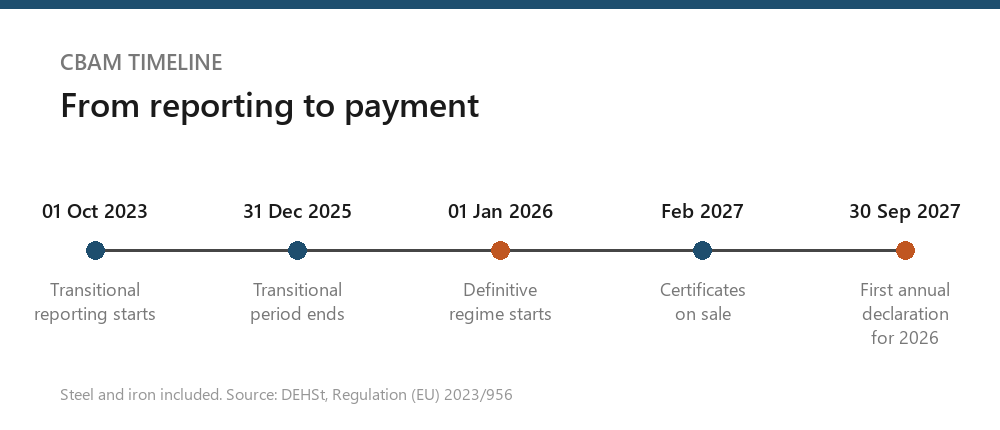
Reporting has become annual. The first CBAM declaration, covering calendar year 2026, is due by 30 September 2027, and certificates are expected to be purchasable through the CBAM registry from February 2027. From 2027, declarants must also hold certificates each quarter worth at least 50 per cent of the embedded emissions imported since January of that year.
Free allocation is being phased out in parallel. The CBAM factor, which sets how much of an installation's emissions is still offset, falls from 97.5 per cent in 2026 to 90 per cent in 2028 and 51.5 per cent in 2030.
In practice the paperwork lands on the supply chain. A declaration can be built on European Commission default values, or on actual installation-level figures verified by an accredited verifier. Producers outside the EU can upload emissions data directly to the O3CI portal of the CBAM registry, which reduces transcription errors between mill and importer. Registration is voluntary, but buyers increasingly ask for it.
For wire producers the commercial consequence is straightforward. The buyer's landed cost now depends on data that only the mill can supply, and the quality of that data has become part of the offer.
Source: German Emissions Trading Authority (DEHSt), Regulation (EU) 2023/956.